
Treasure Coast Sliding Door Repair
LICENSED • INSURED • 15+ YEARS
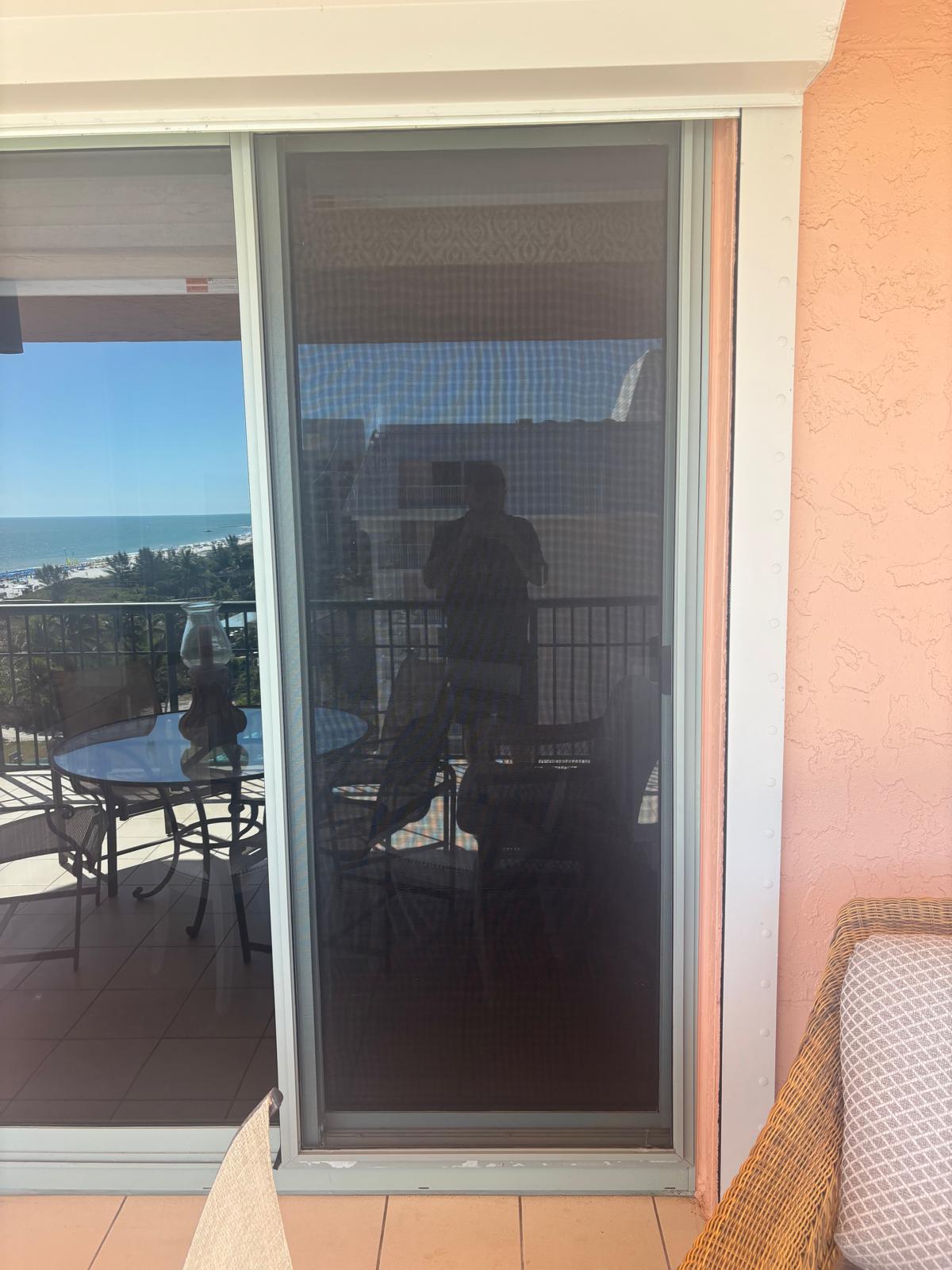
Torn or punctured mesh. The most visible screen door problem. Causes include pet claws, children pushing against the screen, wind-blown debris, lawn maintenance equipment throwing pebbles, and UV degradation that weakens the mesh fibers over time. Standard fiberglass mesh becomes brittle after 7-10 years of Florida sun exposure and tears easily.
Bent or damaged frames. Screen door frames are thin aluminum extrusions that bend when the door is pulled off-track, when heavy objects lean against the screen, or when wind catches the screen like a sail. A bent frame prevents the door from sliding smoothly and creates gaps where insects enter.
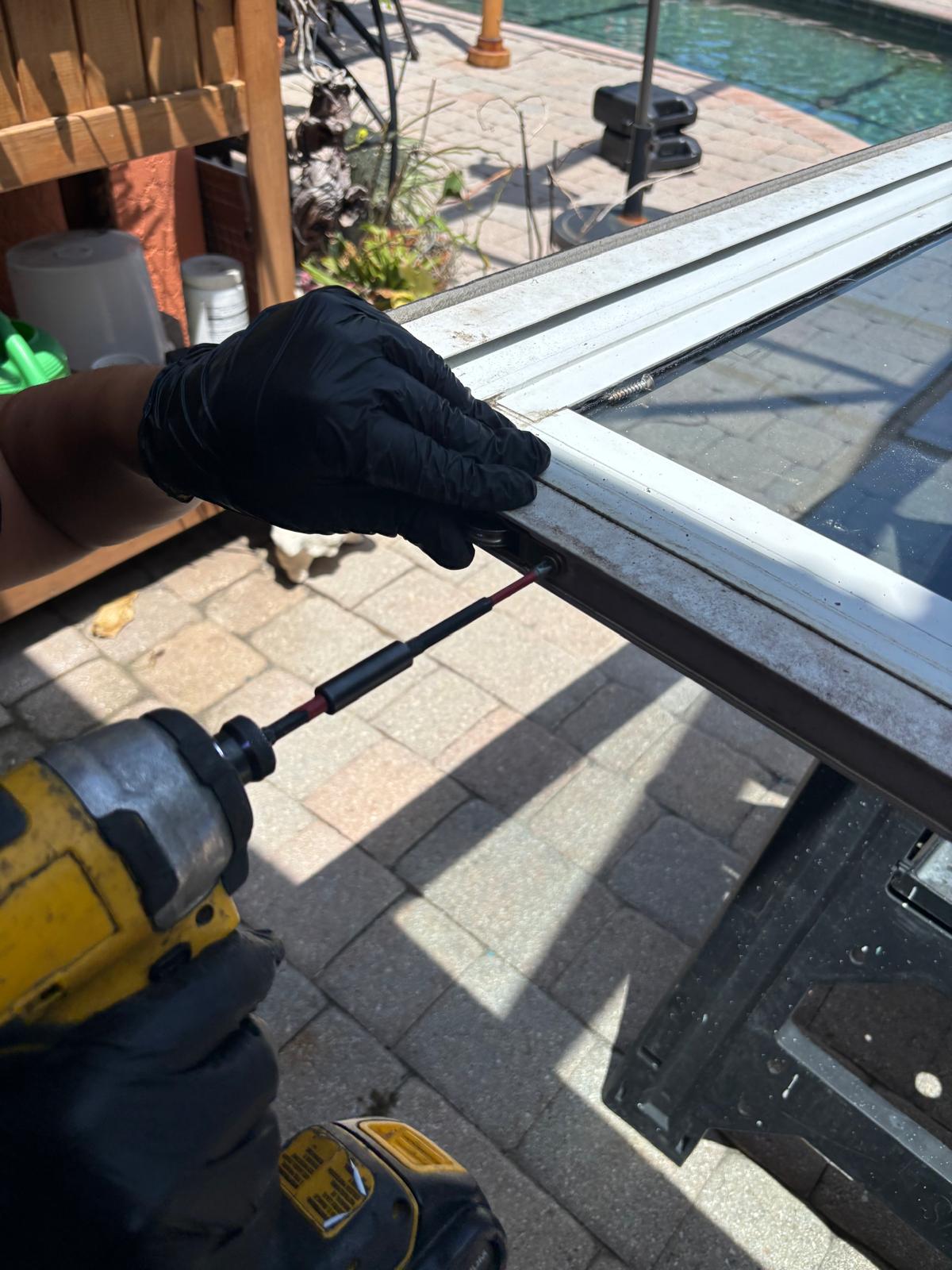
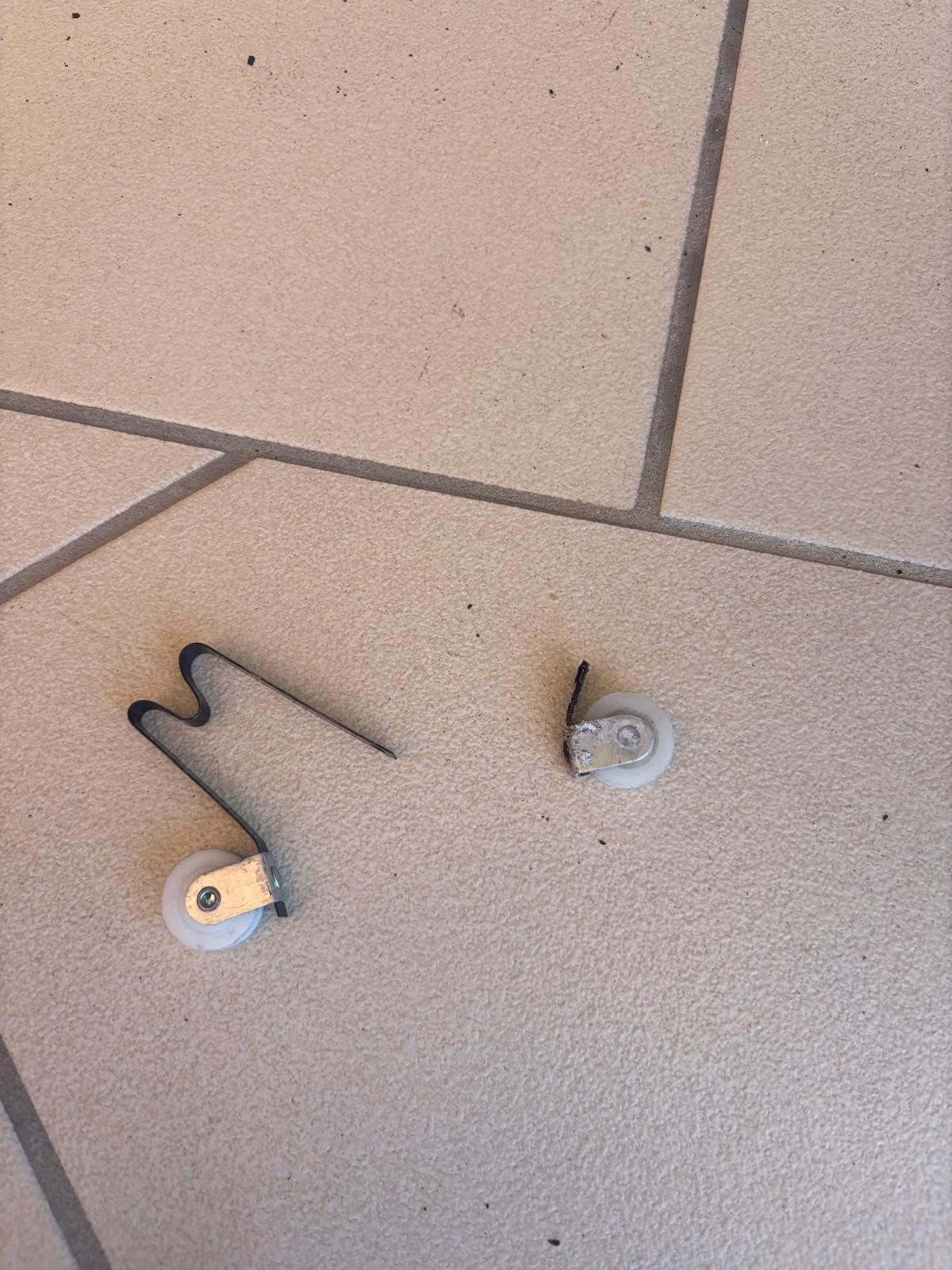
Failed rollers. Screen door rollers are smaller versions of sliding glass door rollers and fail for the same reasons: corrosion, debris, and wear. When screen door rollers fail, the door drags along the track, requiring force to open and close, which in turn bends the frame and tears the mesh.
Standard fiberglass mesh (18x16). The most common residential screen mesh. Blocks mosquitoes and most flying insects. Provides good visibility and airflow. Lifespan in Florida: 7-10 years before UV degradation requires replacement.
No-see-um mesh (20x20). Finer mesh that blocks the tiny biting midges (no-see-ums) that standard mesh cannot stop. Essential for Treasure Coast properties near waterways where no-see-ums are prevalent. Slightly reduced visibility and airflow compared to standard mesh, but the bug protection is worth it for most homeowners.
Pet-resistant screen. Heavy-duty mesh made from vinyl-coated polyester that resists punctures from pet claws. Seven times stronger than standard fiberglass mesh. Recommended for any household with dogs or cats that interact with the screen door.
Solar screen mesh. Reduces heat and UV transmission while still providing insect protection. Can reduce solar heat gain through the screen opening by up to 70%, lowering cooling costs. Popular on west-facing Treasure Coast lanais that receive intense afternoon sun.
If the frame is straight and the rollers work, re-screening (replacing just the mesh) is the most cost-effective option. We remove the old mesh and spline, install new mesh of your chosen type, and secure it with new spline material. The door goes back on the track looking and functioning like new.
When the frame is bent, the rollers are shot, and the mesh is torn, a complete screen door replacement makes more sense. We install a new frame, rollers, mesh, and handle assembly sized to your existing track opening. No modifications to the main door frame or track are required.
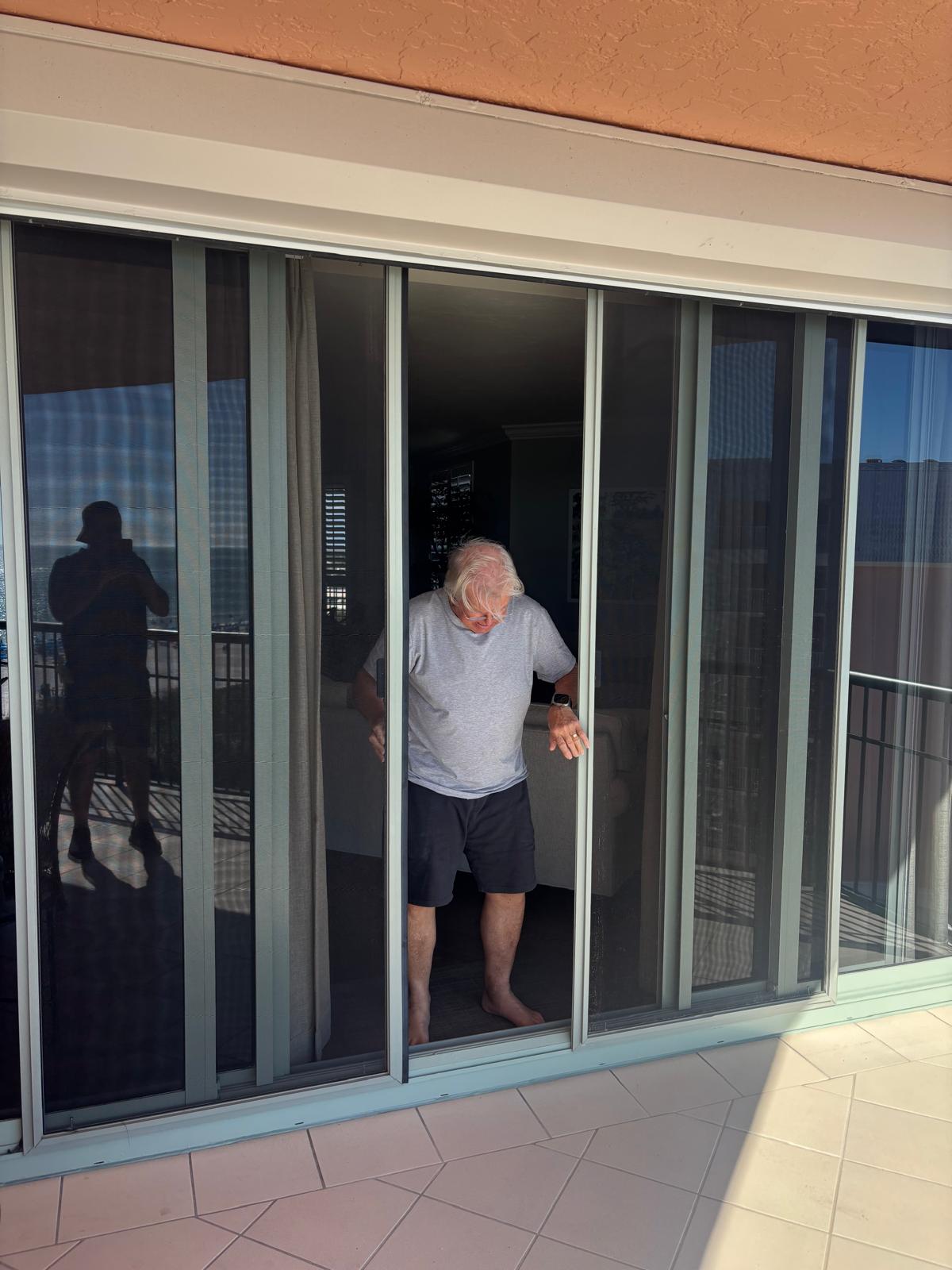
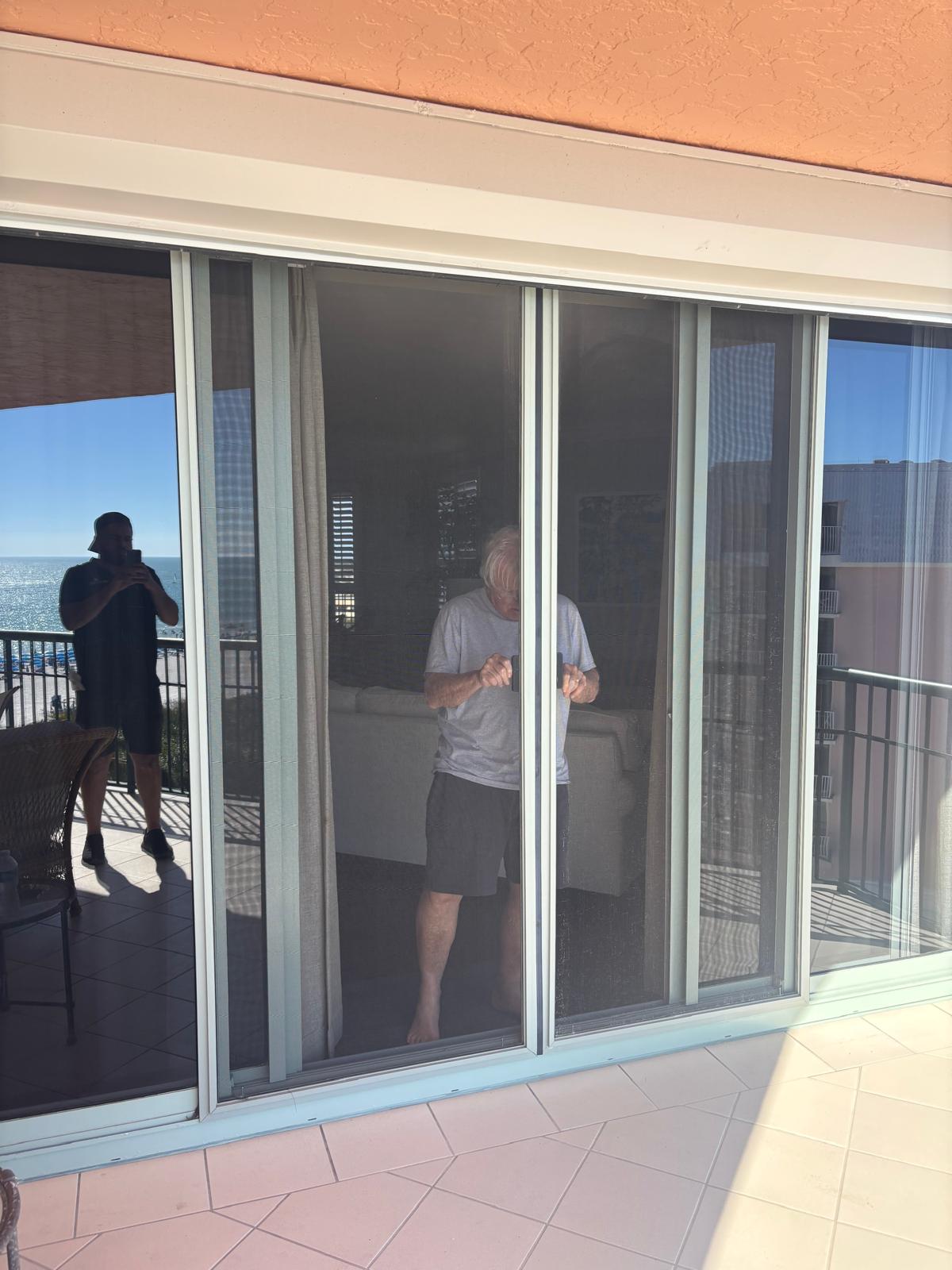
Replace torn or UV-degraded mesh with standard, no-see-um, pet-resistant, or solar screen options. Same frame, new mesh.
Replace failed screen door rollers for smooth sliding operation. Prevents frame bending and mesh tearing from forced operation.
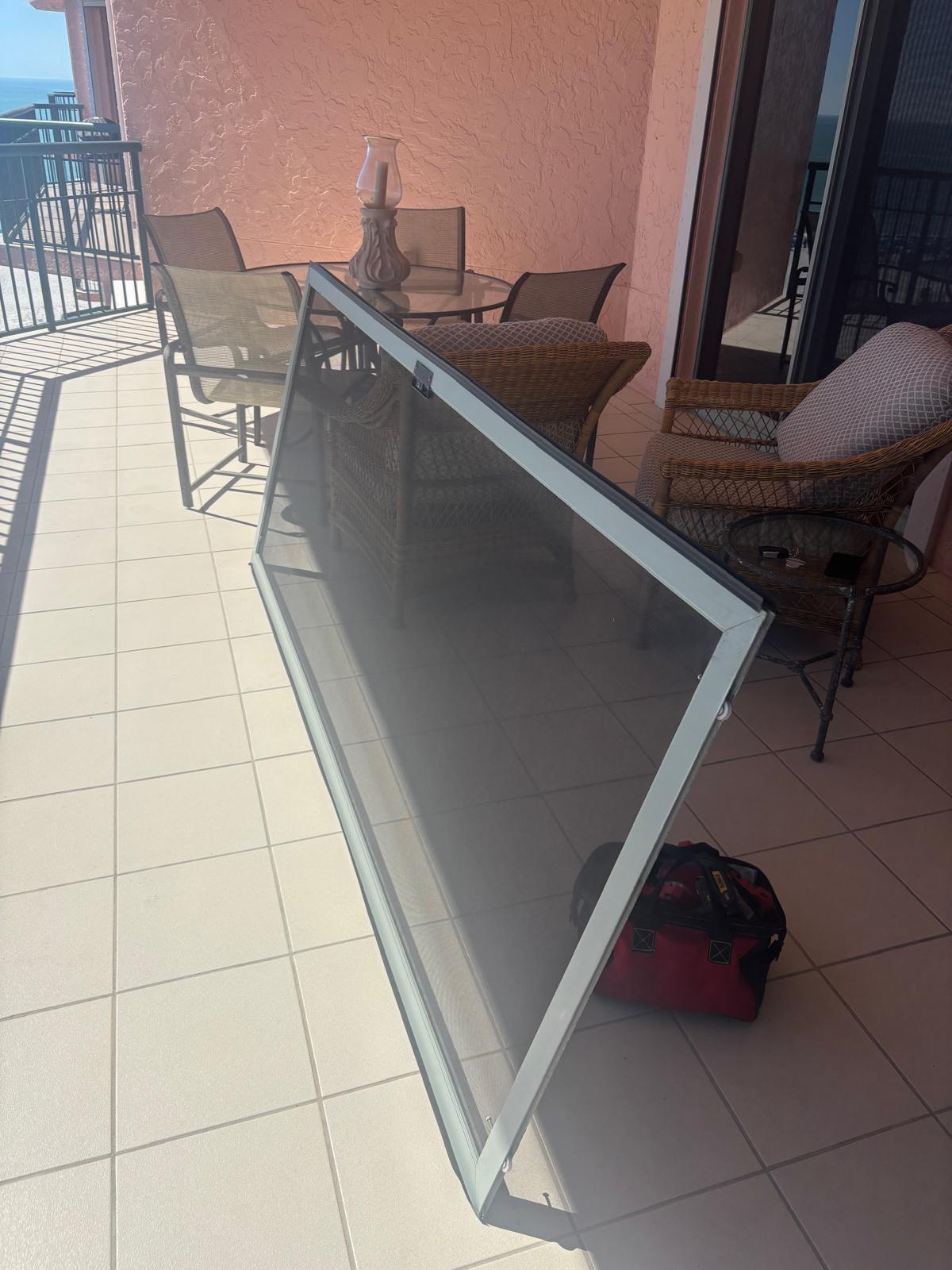
Straighten bent frames or install complete new screen door assemblies sized to your existing track.
Upgrade from standard mesh to 20x20 no-see-um mesh. Essential for Treasure Coast properties near waterways.